
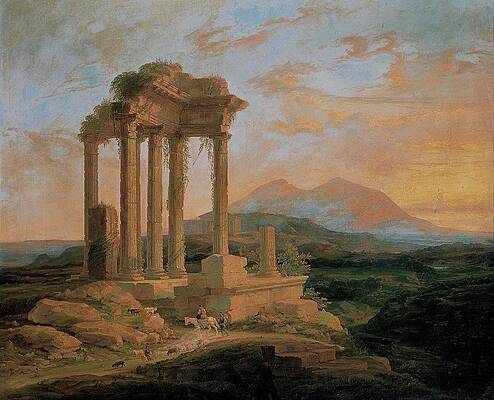
Just finished a chapter for a new book project with my colleague Dominic Smith at the University of Dundee called Teaching in the Ruins. We’re settling on the exact subtitle, but it’ll be something along the lines of De-Limiting the University with Benjamin and Derrida. For my half of the book – two chapters called Teaching in the Ruins of Nature – I’ve been going through Derrida’s unpublished seminars on teaching, including Greph: Le Concept de l’idéologie chez les idéologues français (1974-75) and La Raison universitaire (1982-83), and of course returning to his reflections on teaching in La Chose!
This is a draft of the pitch we’ve developed: ‘The institutions and practices of education are today being turned upside down and inside out by wicked economic, pedagogical, technological and ecological problems such as the emergence of generative artificial intelligence, globalisation, and the intensification of climate catastrophe. Channelling cutting-edge work between a philosopher of technology (Smith) and a philosopher of nature (Lynes), Teaching in the Ruins offers a diagnosis and a remedy. The diagnosis is that teaching must be recognised to be in ruins. The remedy is a focused reassessment of the role and purposes of teaching, through engagement with the work of two academic outsiders who knew how to bring the ‘outside in’ to the university in different yet powerfully related ways, and who carefully mapped the forces of technology and ecology between which the contemporary university is crumbling: Walter Benjamin and Jacques Derrida. What results is a thoroughgoing ‘in praise of teaching’ in terms of three novel concepts: de-limitation, ruination, and plurigraphy. By charting these concepts and their relations, Lynes and Smith approach teaching as 1.) a process of mapping attuned to the limits and outsides of the institution (de-limitation), 2.) a supra-institutional practice that normatively ought to ruin our expectations, presuppositions, habits and siloes (ruination), and 3.) an always shared and historically situated form of recording and conveying that allows us to engage, explore and rewrite responses to our biggest shared questions together (plurigraphy).’
I may present this material at Derrida Today, or the material on ‘Devourance’ and the Manger l’autre/Rhétorique du cannibalisme material I’d been developing for the Kyoto School book. I got the term Devourance from Robert Eggers’ remake of Nosferatu. It’s in a line by the Renfield-ish character, ‘he is infinity, eyes shining like a jeweled diadem, and then, putrescence, asphyxiance, and devourance.’ It’s not a word I can find proof of anywhere else, but obviously the ‘middle voiced’ –ance is inviting for deconstructive work.

